 Admin
AdminIntroduction
Managing labour efficiently has become a critical factor in determining operational success.
As businesses scale, workforce management becomes more complex, involving multiple shifts, departments, locations, and compliance requirements. Relying on manual systems or disconnected tools often leads to inefficiencies, errors, and increased costs.
To address these challenges, organizations are adopting advanced solutions like emHRMS, designed to seamlessly connect workforce operations across the enterprise.
What is a Labour Management System?
A Labour Management System (LMS) is a digital platform that helps organizations plan, track, and optimize their workforce.
It enables businesses to:
- Forecast labour requirements
- Track employee attendance and working hours
- Monitor productivity and performance
- Optimize workforce allocation
- Ensure compliance with labour regulations
In essence, an LMS helps organizations align their workforce with operational demands, ensuring maximum efficiency.
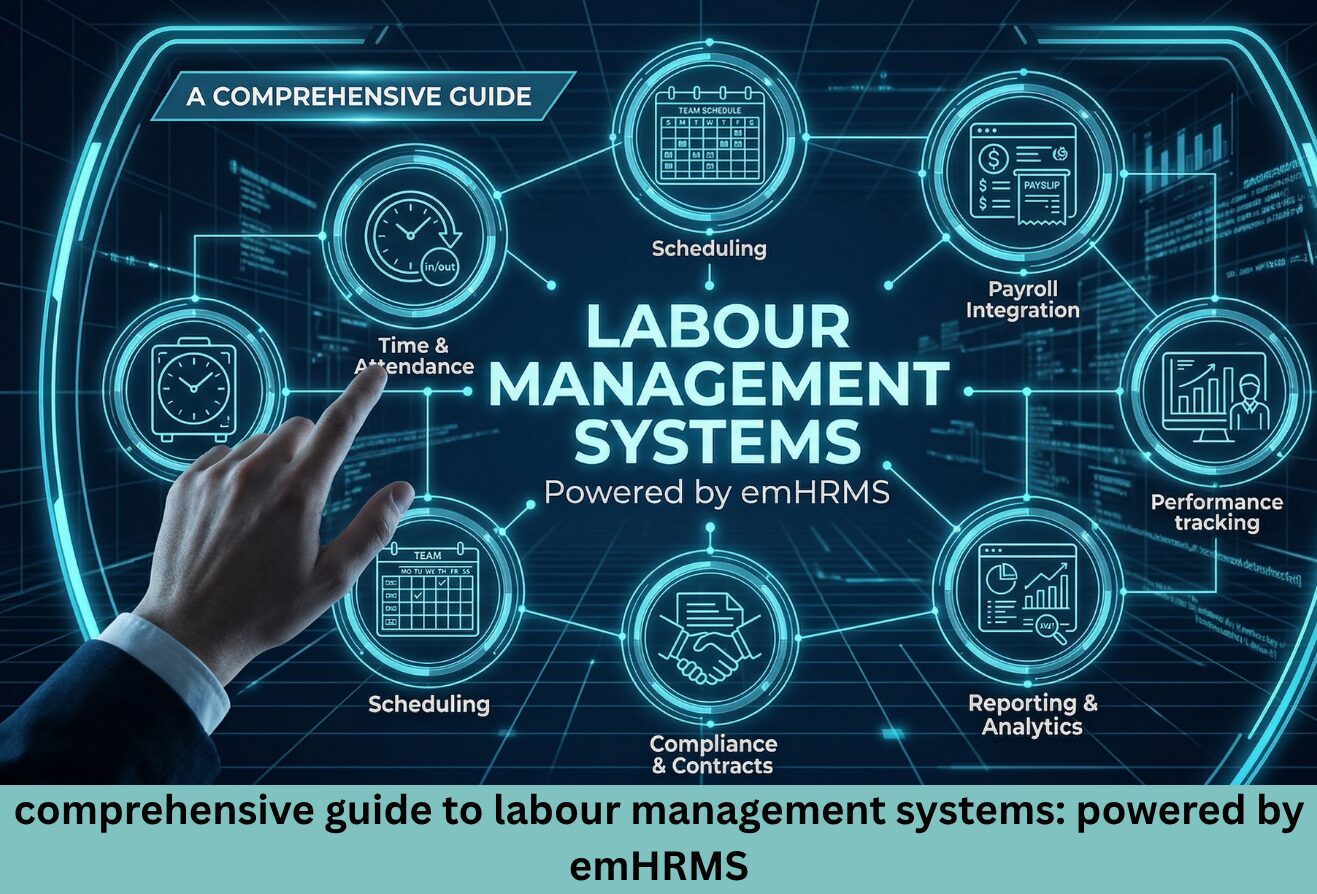
Key Features of a Labour Management System
1. Workforce Planning and Forecasting
A robust LMS uses data insights to predict workforce needs based on operational demand, helping avoid underutilization or overstaffing.
2. Time and Attendance Management
Automated tracking of employee attendance, shifts, and overtime reduces manual intervention and improves accuracy.
3. Productivity Monitoring
Businesses can measure workforce performance in real time, identifying inefficiencies and areas of improvement.
4. Task Allocation and Tracking
Managers can assign tasks and monitor progress, ensuring better coordination across teams.
5. Compliance and Reporting
An LMS ensures adherence to labour laws while generating reports that support audits and strategic decisions.
Challenges with Traditional Labour Management
Despite its importance, many organizations still rely on outdated systems that result in:
- Fragmented workforce data
- Lack of real-time visibility
- Manual errors in attendance and reporting
- Inefficient resource allocation
- Delayed decision-making
These challenges directly impact productivity and increase operational costs.
How emHRMS Enhances Labour Management?
emHRMS goes beyond traditional LMS capabilities by offering a connected and intelligent workforce management approach.
Centralized Workforce Management
All workforce data, from attendance to performance, is available on a single platform, improving visibility and control.
Seamless Enterprise Integration
emHRMS connects HR, operations, and management functions, eliminating silos and enabling smoother workflows.
Real-Time Insights
Instant access to workforce data helps businesses make faster, more informed decisions.
Automation of Processes
Routine tasks such as attendance tracking, shift scheduling, and reporting are automated, reducing manual effort.
Scalable and Flexible
Designed for growing enterprises, emHRMS adapts to changing workforce requirements and operational complexity.
Benefits of Implementing emHRMS
Improved Operational Efficiency
Better workforce planning leads to smoother execution of daily operations.
Cost Optimization
Aligning labour with actual demand helps reduce unnecessary expenses.
Enhanced Productivity
Performance tracking and insights enable continuous improvement.
Better Decision-Making
Access to real-time data supports strategic planning and faster execution.
Regulatory Compliance
Ensures adherence to labour laws, reducing legal risks.
Industries that benefit from labour management systems
Labour Management Systems like emHRMS are widely used across industries such as:
- Manufacturing
- Warehousing and logistics
- Retail
- Construction
- Healthcare
These industries depend on efficient workforce coordination and real-time monitoring.
Why businesses need a connected LMS today?
Modern enterprises require more than just workforce tracking.
They need systems that can:
- Integrate across departments
- Provide real-time insights
- Scale with business growth
- Enable data-driven operations
emHRMS addresses these needs by transforming workforce management into a connected, intelligent system.
From Workforce Management to Workforce Optimization
Labour management is no longer just an operational function, it is a strategic driver of efficiency and growth.
By implementing a solution like emHRMS, businesses can move from fragmented processes to a unified, data driven approach.
The result is a workforce that is not only managed effectively but also optimized for performance, scalability, and long-term success.